Transcript
Opening
0:00 First I'd like to thank the director general of IE Unclear in recording 0:30 1:00
It is the second thermometer Unclear in recording And State Treasurer Leiber, Director General May Unclear in recording and distinguished guests, good afternoon. It is a profound honor to stand before you today in the Badger State. This is the historic heartland of American manufacturing, cutting sta-- cutting-edge innovation, and an unmatched industrial work ethic.
I would also 1:30 like to extend my heartfelt appreciation to WTC, uh, for gracefully hosting us today. Today marks a truly historic milestone as we sign our MOU, uh, for economic cooperation. This MOU, deep in my heart, is a declaration of a shared economic destiny. Having concluded my forty year tenure in banking, I think that's all, 2:00 and public finance, I step into the role of chairing Taiwan's Economic-- International Economic Cooperation Association.
A crossroad in history
In both capacities, I have closely observed global economic and geopolitical shifts. Today, we stand at a unique crossroad in history. For decades, the global economy assumed that high-value design belonged in the West, whilst 2:30 manufacturing could be safely outsourced to the East. Today, those assumptions have gradually changed.
We are in an era of structural realignments where supply chain resilience, national security, and domestic industrial capacity for economic security are paramount. As the United States embarks on an ambitious journey of re-industrialization, some 3:00 observers in Asia view this with anxiety, mirroring the hollowed out of Taiwan's legendary silicon shield.
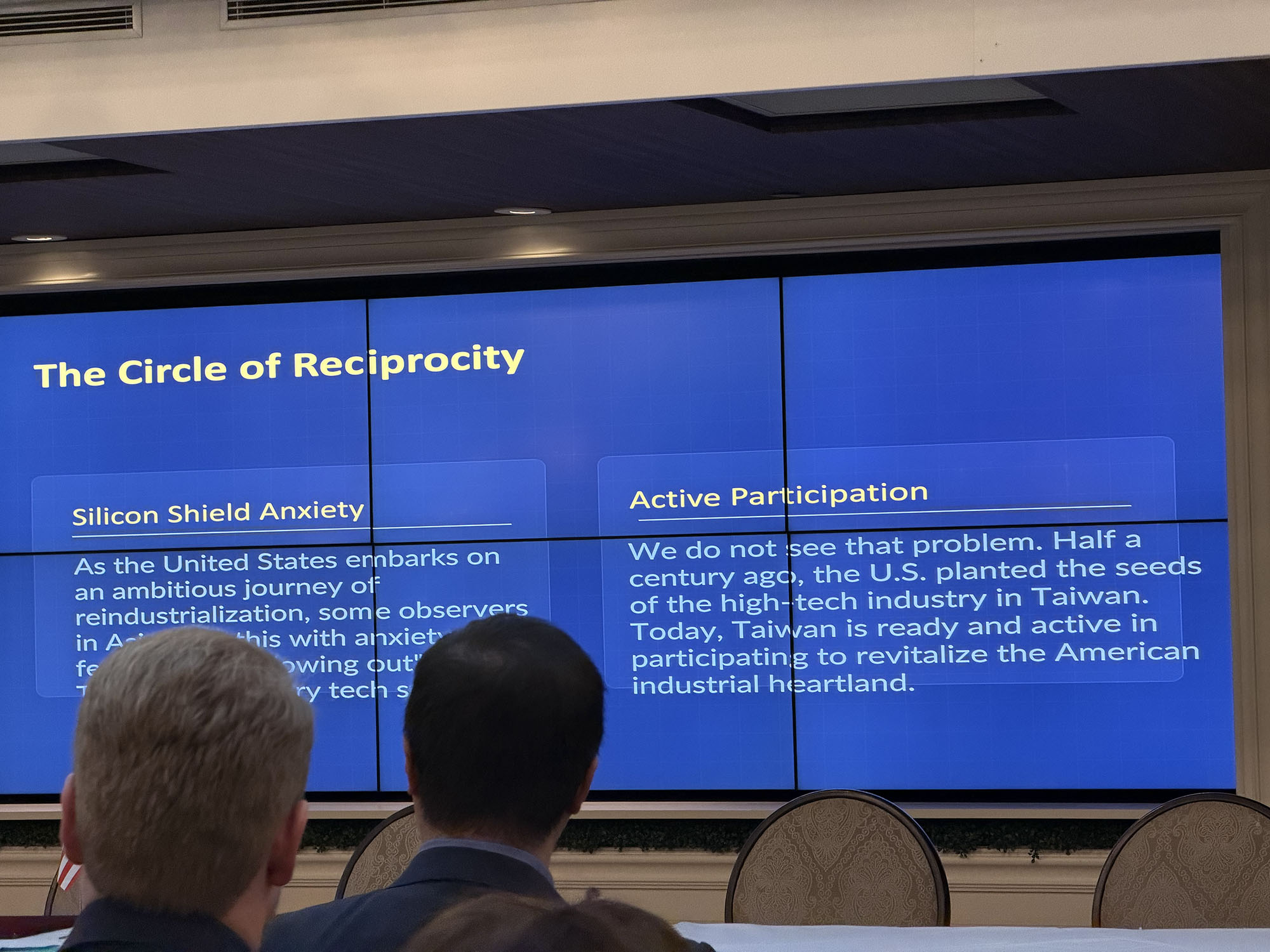
However, I do not see that problem. What I see is a beautiful historical circle of reciprocity. Half a century ago, the United States planted the seeds of high-tech industry in Taiwan. Today, with deep gratitude, Taiwan is ready 3:30 and active in reciprocating that favor, participating in revitalizing the American industrial power right here in Wisconsin.
About CIECA
As we embark on this new chapter with WTC, I would like to brief you about us, CIECA. As a primary driver of Taiwan's private sector economic cooperation internationally, CIECA 4:00 serves as a vital bridge- Connecting global industry leaders, financial institutions, academic institutes, and policymaking bodies under our team of teams strategy.
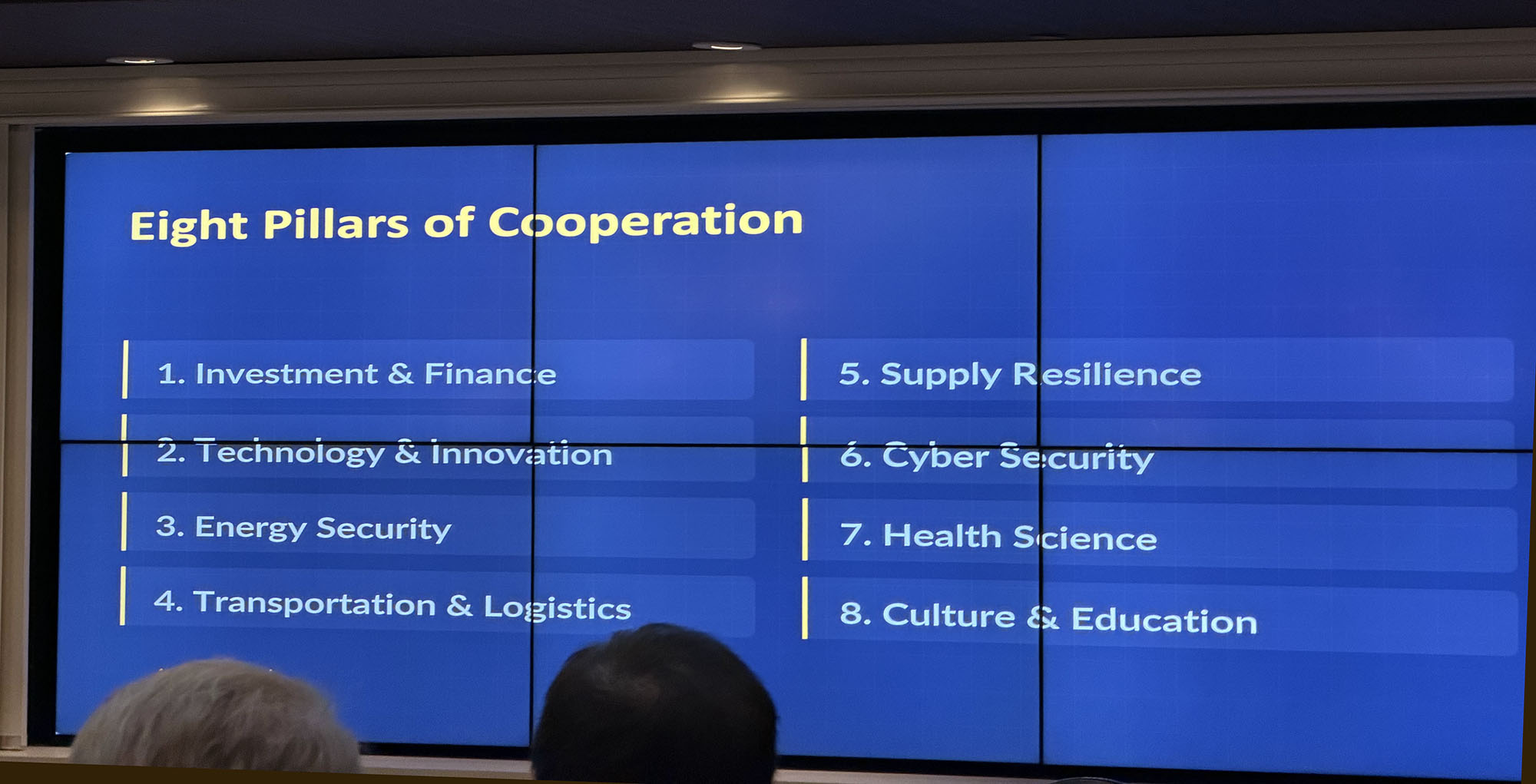
To meet the demands of a rapidly changing global landscape, CIECA has expanded its operational scope across eight core strategic pillars. First, 4:30 investment and finance, technology and innovation, energy security, transportation and logistics, supply chain resilience, cybersecurity, health science and biotechnology.
Last but not least, culture and education for talent incubation. This holistic framework reflects our core conviction that true industrial cooperation extends 5:00 far beyond capital. It requires a total ecosystem built on operational alignment, talent development, and 5:30 6:00
What I see is a beautiful historical circle of reciprocity.
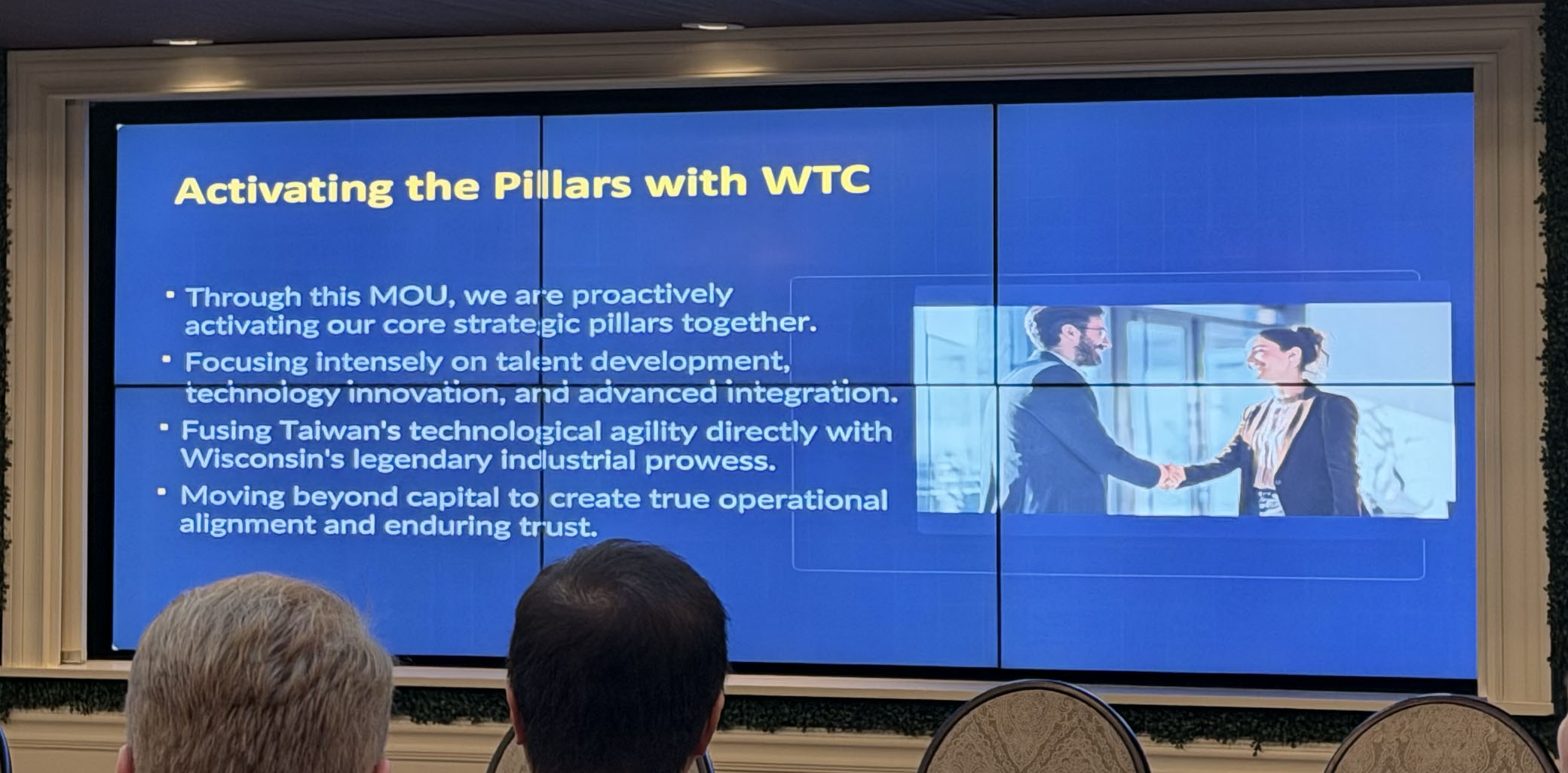
actively activating these exact pillars, particularly focusing on talent development, 6:30 technology innovation, and advanced integration to fuse Taiwan's technological agility with Wisconsin's visionary industrial prowess. To appreciate where we are going, we must look back. Taiwan's modern economic miracle did not happen in a vacuum.
What America gave Taiwan
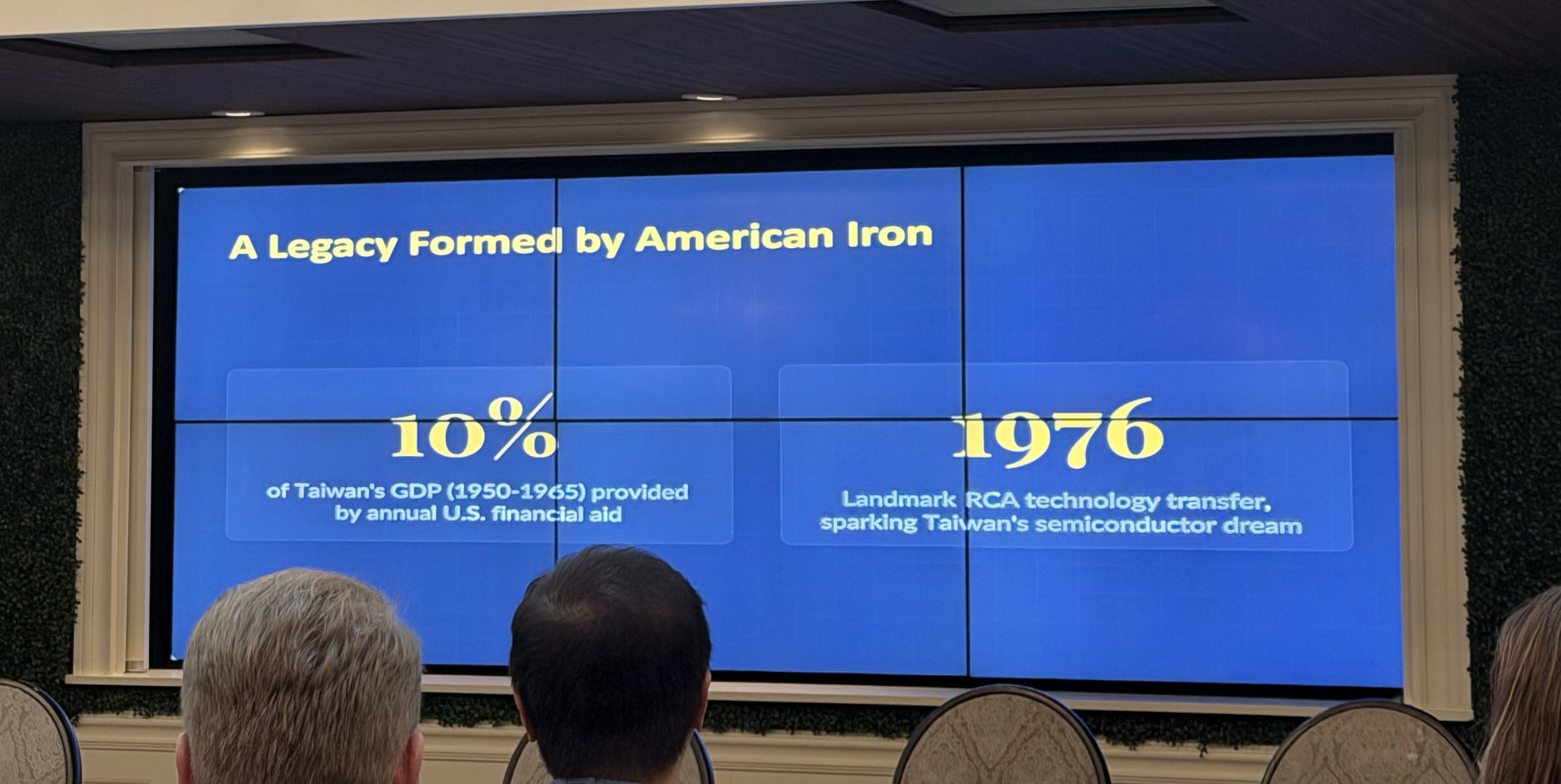
After the devastation of World War II, the United States stood as our most faithful economic 7:00 and security partner. Between nineteen fifty and nineteen sixty-five, the United States government provided Taiwan with one hundred million US dollar annually, approximating ten to twelve percent of our GDP at the time.
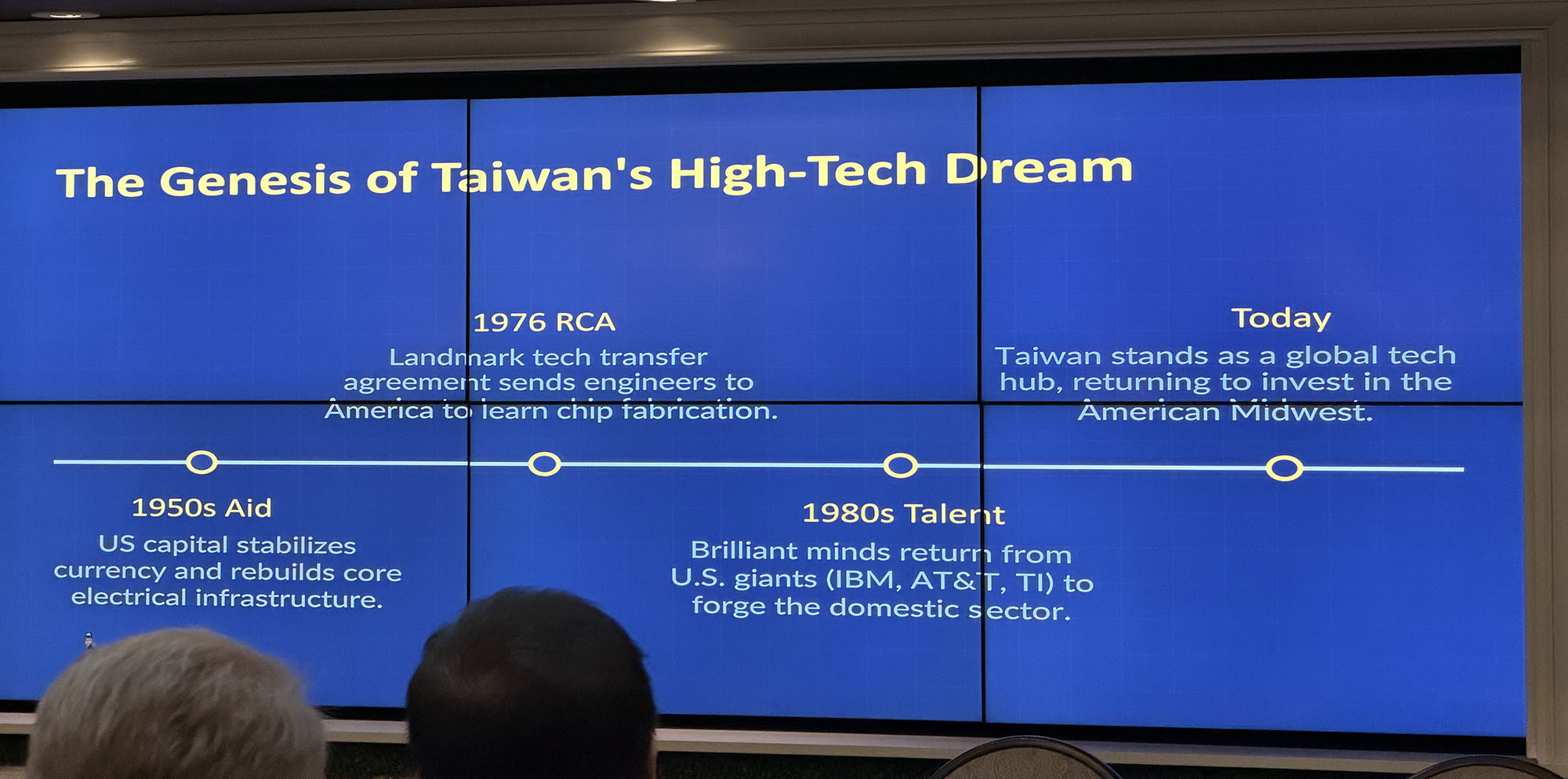
This capital helped stabilize our currency and rebuild our transport and electrical infrastructure. But America did not Unclear in recording 7:30 did something even more precious. When financial aids phased out, the US worked hand in hand with our policymakers to establish a free market economy and open its massive consumer market to Taiwanese goods.
The 1976 technology transfer
We learned our semiconductor excellence initially from America. In nineteen seventy-six, Taiwan decided to pursue its high-tech 8:00 dream and signed a landmark technology transfer agreement with RCA Corporation under the break-- under which a brave group of young Taiwanese engineers went to the States to learn how to design and fabricate microchips.
We did pay the license fee. We did not steal from the
Americans. And, uh, for your information, we paid three 8:30 point five million US dollar at that time Equivalent of our point, our, uh, point three percent of our national, uh, foreign exchange reserve. That's huge. But it shows our, our strong will to pursue our high-tech dream. Most engineers return home from the core team of, and from the core team of the Industrial Technology 9:00 Research Institute, ITRI, which eventually birthed TSMC in nineteen eighty-seven.
Taiwan as a tech island
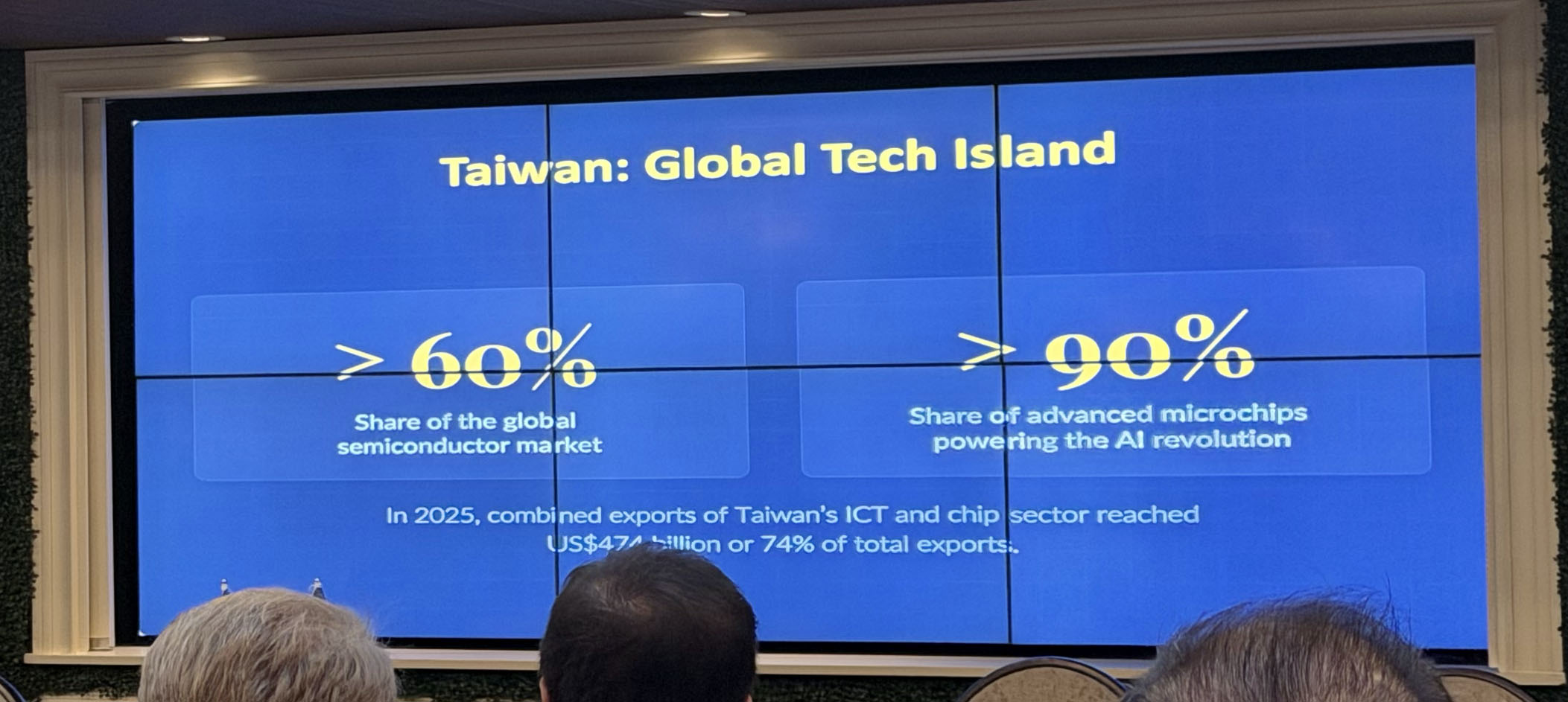
Taiwan's tech sector was sustained by brilliant talents returning home from American tech giants such as IBM, AT&T, and Texas Instruments. Today, Taiwan serves over sixty percent of global semiconductor markets and over ninety percent of 9:30 advanced chips powering the AI revolution. In twenty twenty-five, the combined export of Taiwan's ICT and chip sector reached four hundred and seventy-four billion US dollar, representing three-quarters of Taiwan's total export.
For this year, today, it accounts for seventy-eight percent of our total export. Taiwan has become a tech island critical 10:00 to the world, but we fully recognize that our sil- our silicon shield was forged with American ironclad support. The US government is now moving at full speed to energize its manufacturing sector.
We did pay the license fee. We did not steal from the Americans.
America’s manufacturing atrophy
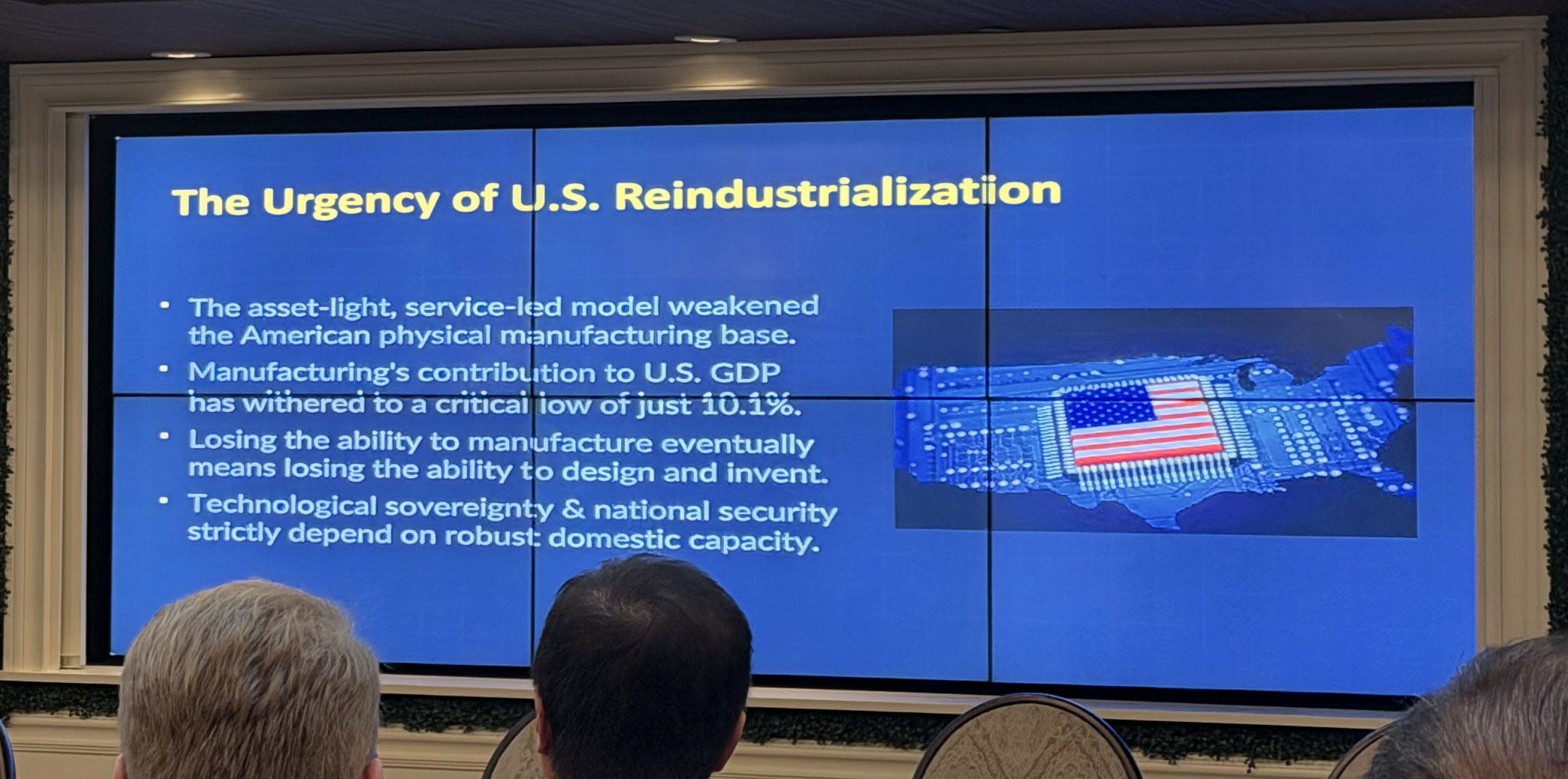
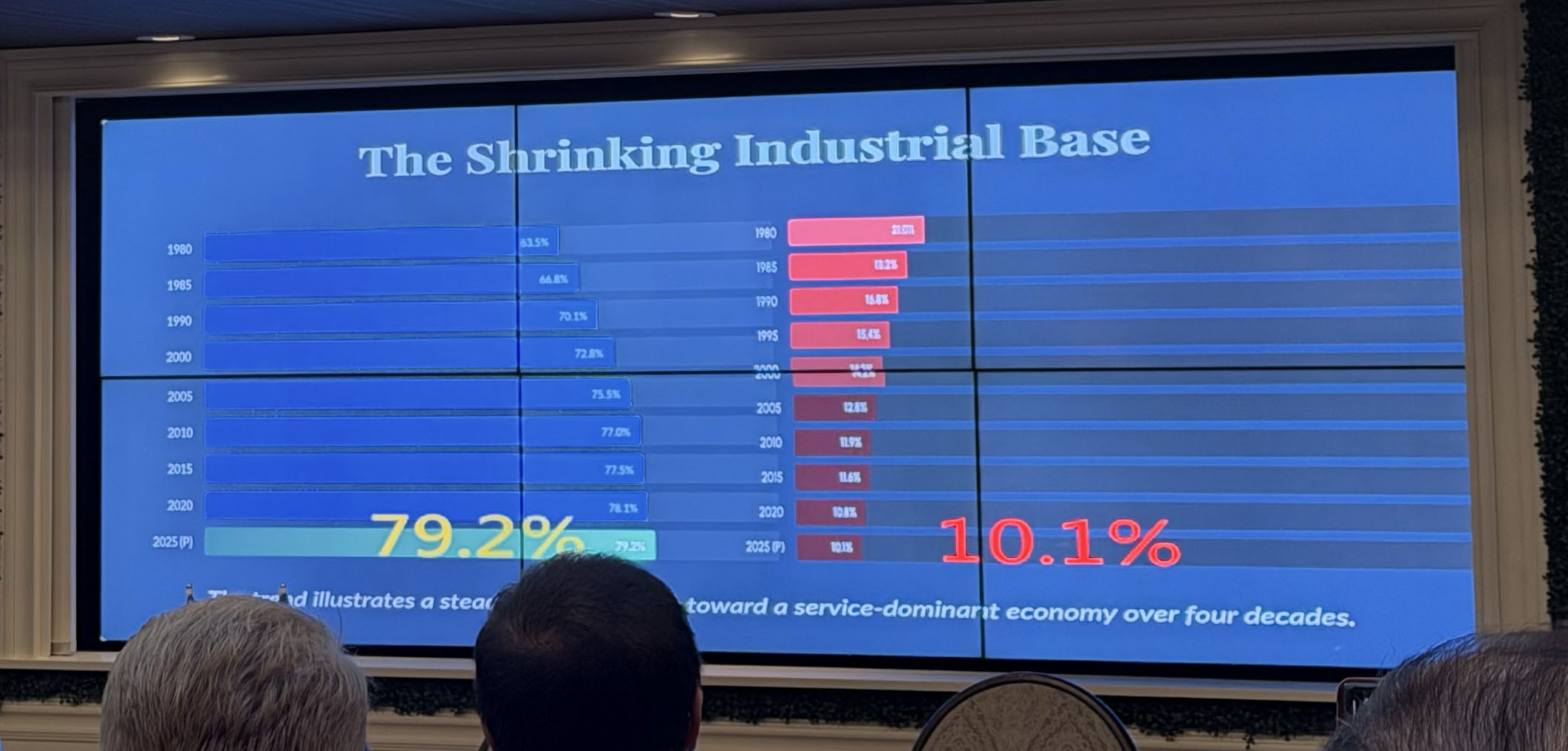
For decades, uh, externalized service-led model weakened American physical manufacturing base. To exceed this fact Unclear in recording , manufacturing's contribution to US 10:30 GDP has dwindled to just ten point one percent of GDP. American shipbuilding, steel production, and machine tool output have plummeted significantly from his, from their historical global leadership.
This industrial atrophy is a profound systemic risk. When we lose the ability to manufacture, we eventually lose the ability to design and invent. 11:00 Most critically, it could erode national security when technological sovereignty is compromised. Taiwan's companies are now participating in America's revitalization.
Taiwanese investment across America
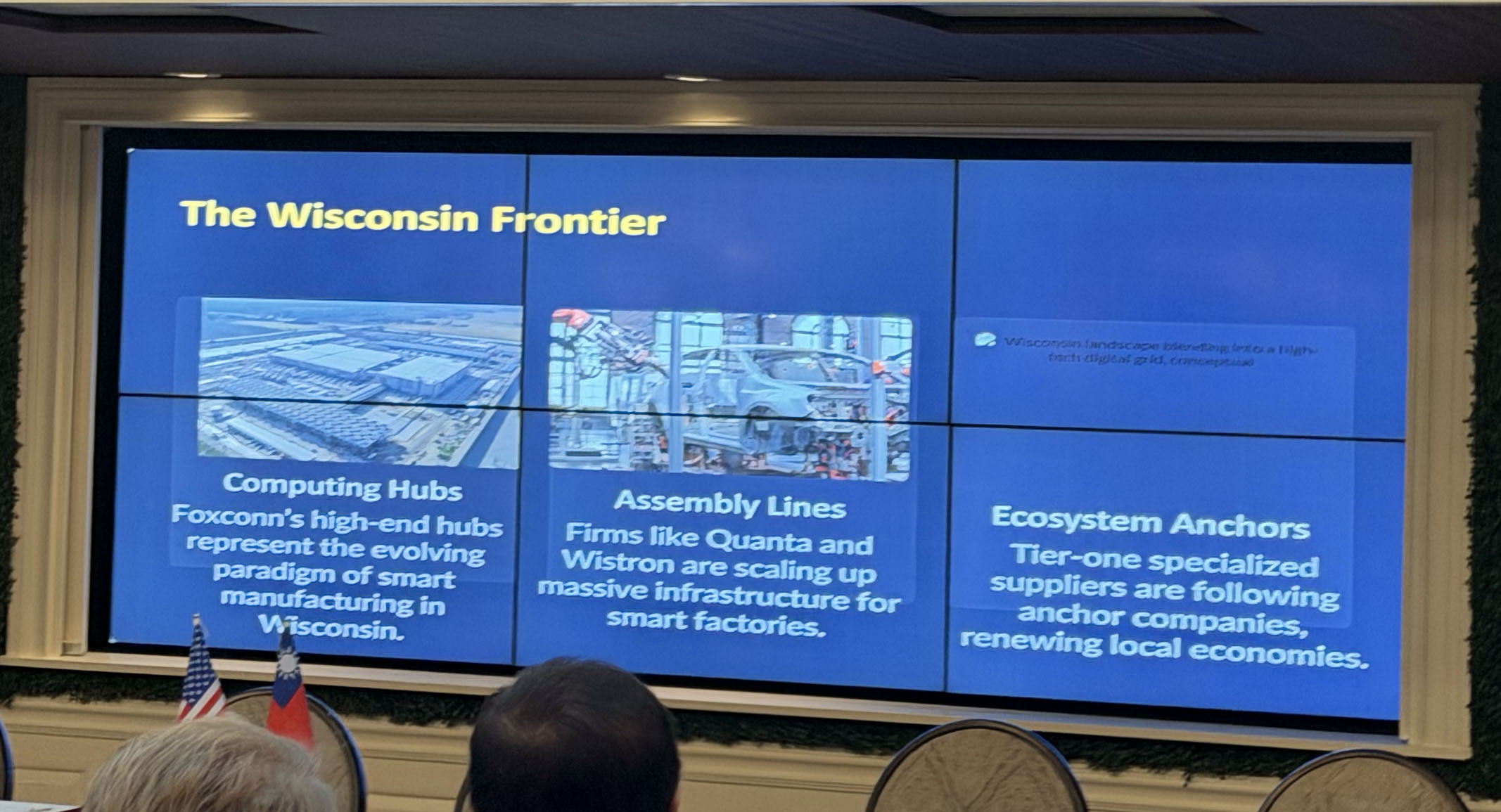
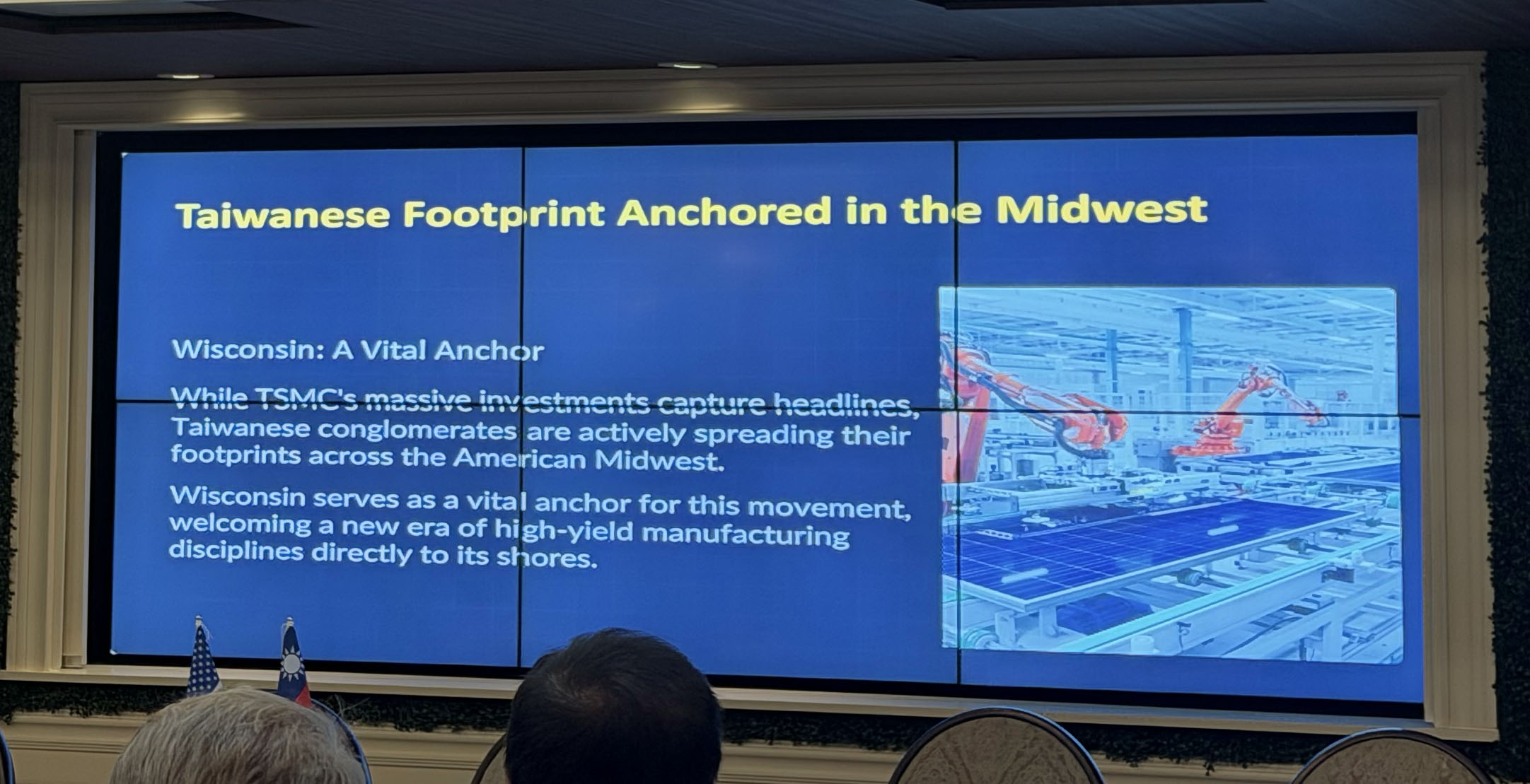
We are actively funding and building it. Once TSMC's massive investment captured the headlines, Taiwan's con-conglomerates are spreading their footprint across 11:30 America. Midwest and Wisconsin is a vital anchor. Looking at this Foxconn right there, right here in Wisconsin, Foxconn's high-end computing hubs and manufacturing footprints represent the evolving paradigm of smart manufacturing.
Companies like Foxconn, Quanta, Wistron are scaling up their high-volume assembly lines across the country, 12:00 providing the custom infrastructure required by American data centers and smart factories. When Taiwanese anchor companies invest, an entire ecosystem of tier one specialized suppliers follow, breathing new life into local economies and bringing high-yield manufacturing disciplines to Wisconsin shore.
We are blessed by the 12:30 participation of Raphael Song, the CFO of Hon Hai USA today. Great pleasure to have you, please.
When we lose the ability to manufacture, we eventually lose the ability to design and invent.
A credit guarantee programme
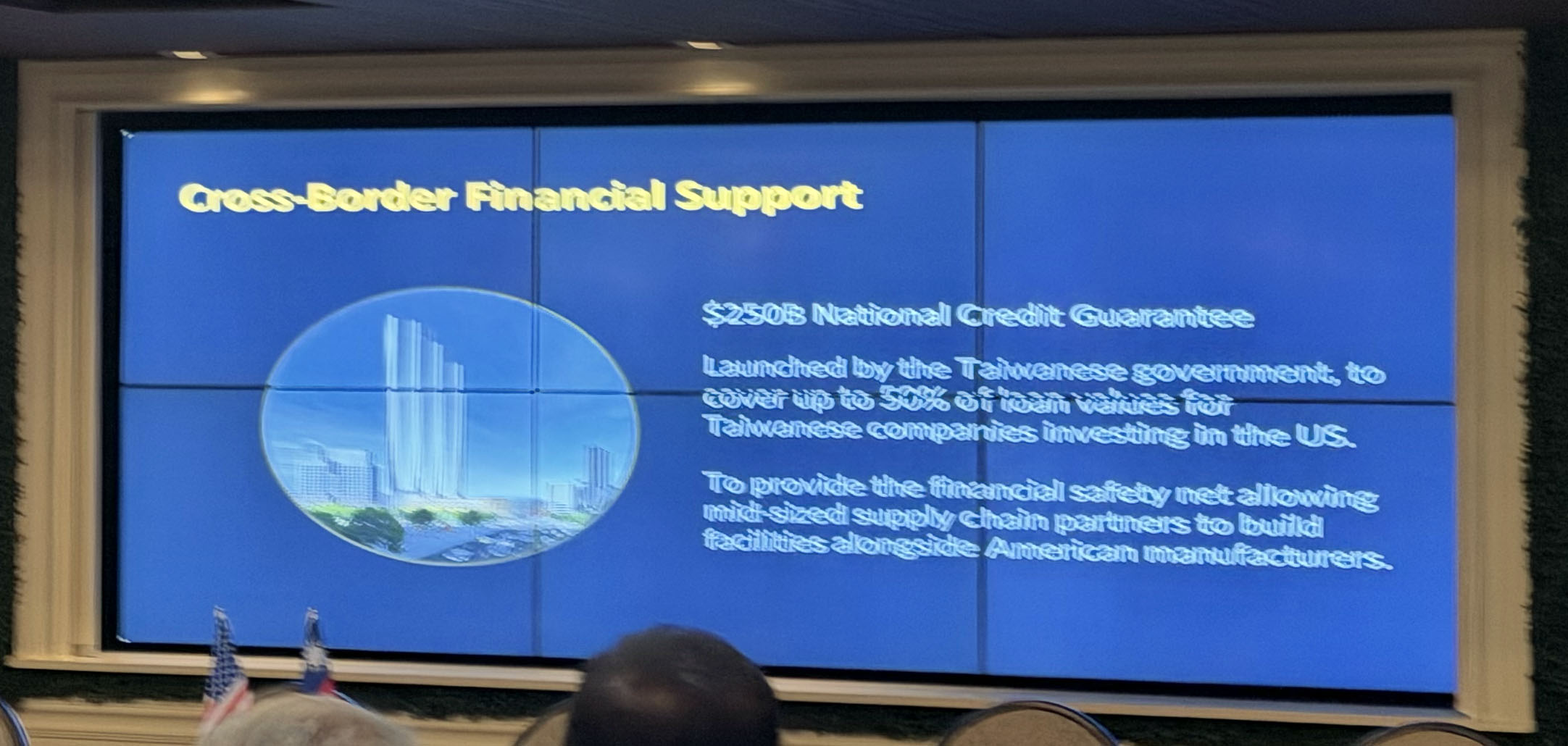
For the moment, the Taiwanese government has launched a historic two hundred and fifty million national credit guarantee program to cover up to fifty percent of loan values for Taiwanese investment into the States. This provide a financial safety 13:00 net that allow our mid-sized supply chain partners to take the leap and build facilities right alongside in the States.
I'm very honored to participate in the establishment of this special program. And today we have Mr. Chen, Executive Vice President of Taiwan Exim Bank, the managing bank of this program, is with us today. 13:30
What the MOU is for
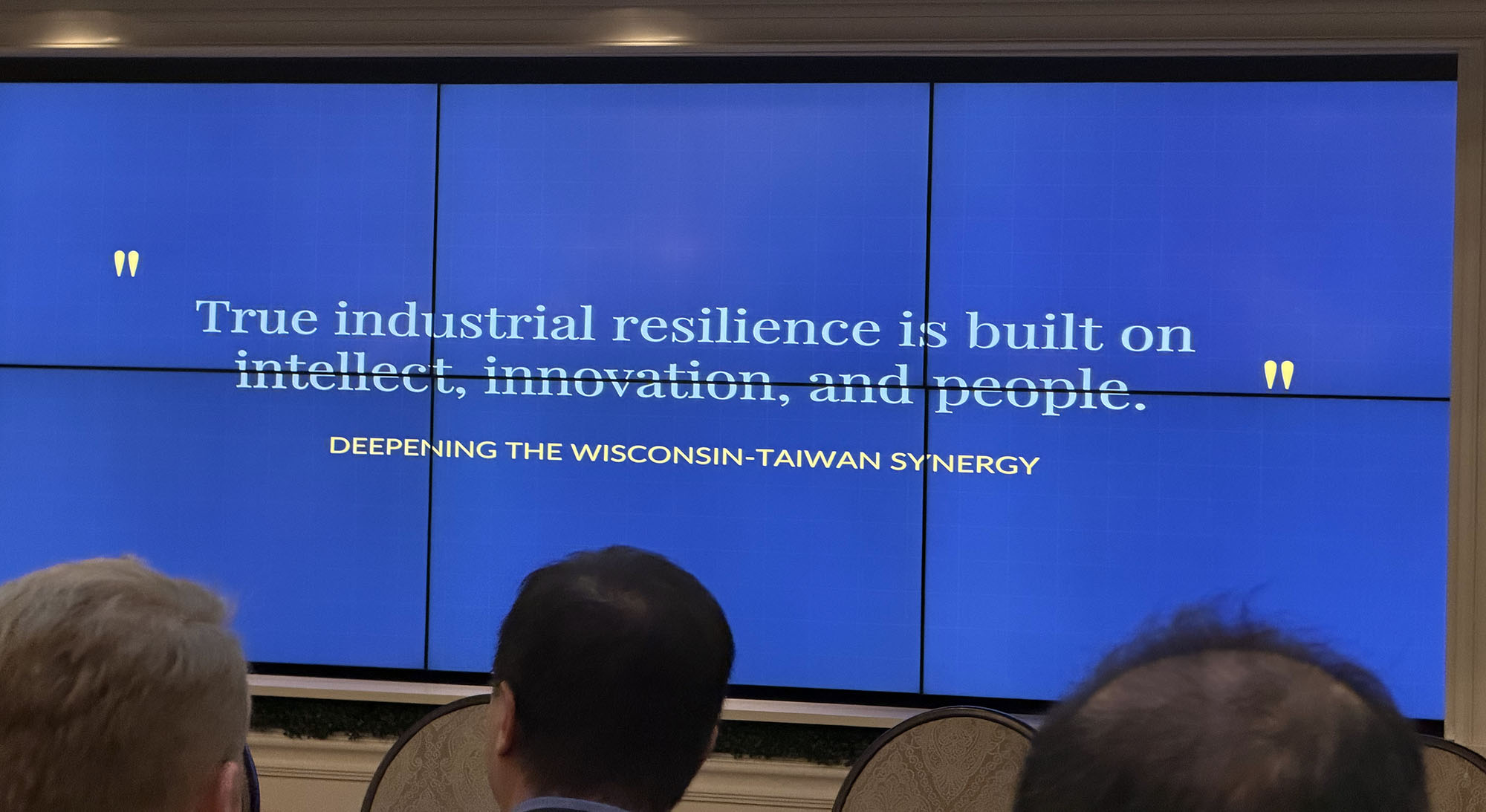
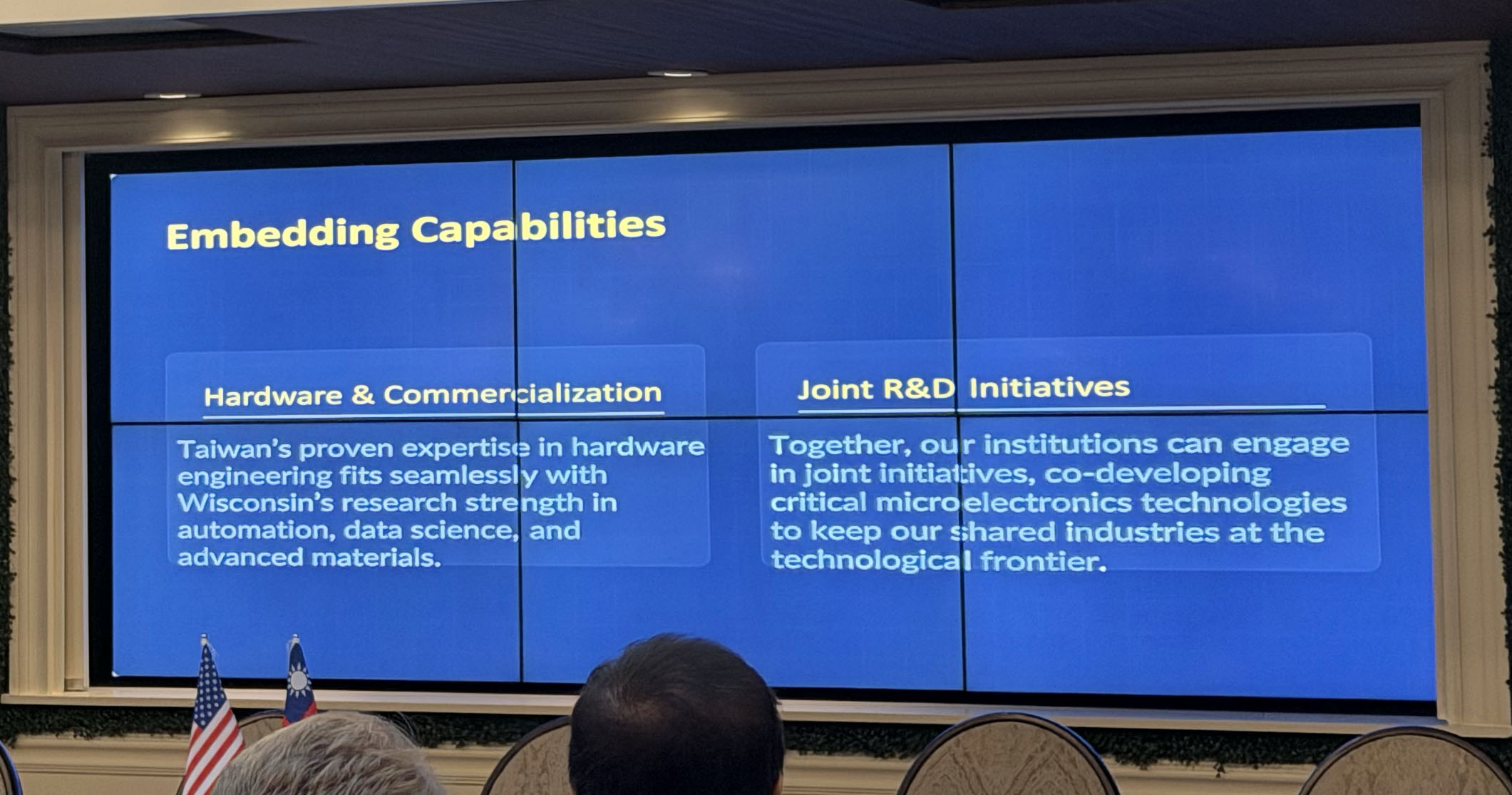
Partnership, however, lies in creating a deep, sustainable synergy. They both have young, visible factories Unclear in recording . True industrial resilience is built on insights, innovation Through this MOU with the esteemed WTC, we are poised to unlock immense collaborative potential. 14:00 Taiwan's expertise in hardware engineering and commercialization fits seamlessly with Wisconsin's research strengths in automation, data science, and advanced materials.
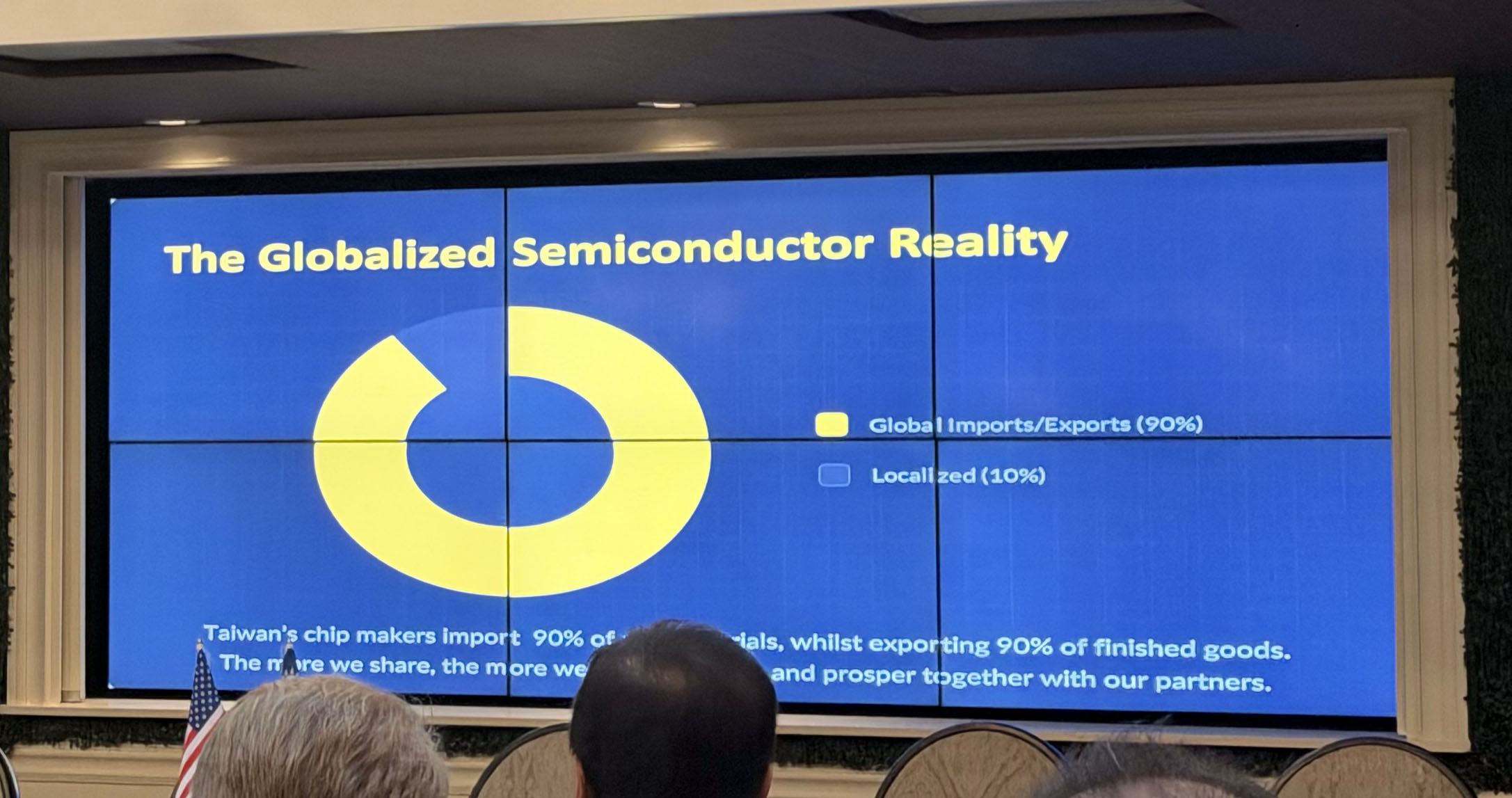
Together, our institutions can engage in joint R&D initiatives, co-developing critical microelectronics technologies that keep our shared industries at the 14:30 technological frontier. Semiconductor manufacturing is by nature a globalized business. Taiwan's chip makers import approximately ninety percent of their raw materials and specialized equipment from global partners, mainly Japan, Germany, the Netherlands, and the United States.
Simultaneously, over ninety percent of the finished goods are 15:00 exported. We firmly, we firmly believe that the more we share, the more we create synergy and prosper together with our international partners. By embedding Taiwan's capability within Wisconsin's robust ecosystem, we are multiplying our strengths together.
In closing
In closing, the re-- the reindustrialization of America and the continued evolution of Taiwan industry 15:30 are the perfect match. We are deeply integrated partners in a secure, trusted, highly resilient Trans-Pacific economic corridor. Fifty years ago, the United States extended its hand to share its tech- technology and help Taiwan's tech-driven economy.
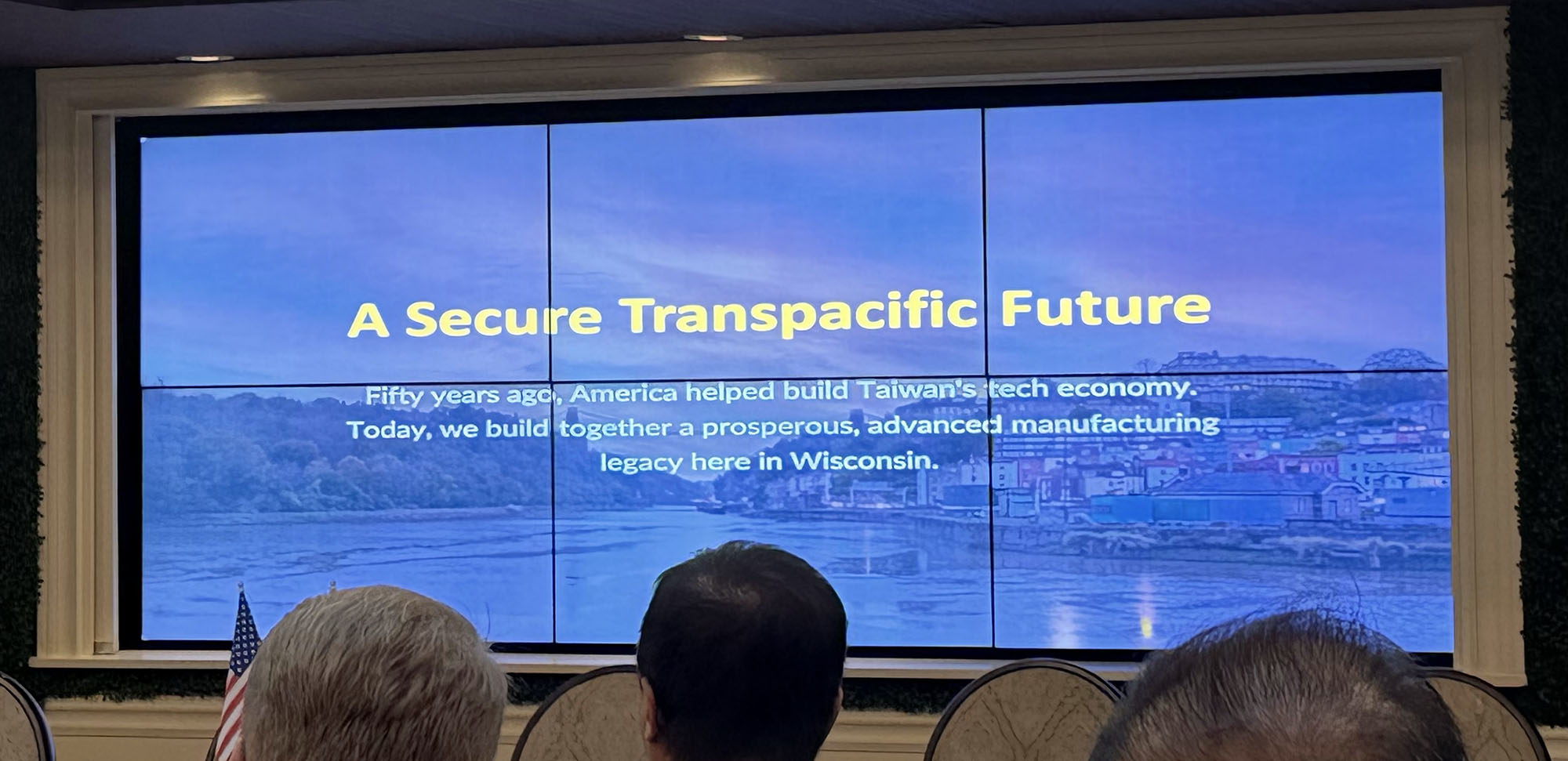
Today, Taiwan is honored, grateful, and fully prepared to reciprocate. By 16:00 combining CIECA's team of teams framework and our eight pillars of cooperation with the technological muscle of the Wisconsin Technology Council, we are ensuring that the free world maintains its absolute lead in, in the technologies that will define the next century.
The more we share, the more we create synergy and prosper together.
Let's leverage this historic MOU. Let's turn some perce-- what some 16:30 perceive as a supply chain challenge to Taiwan into our greatest shared opportunity. Let's build a prosperous, advanced manufacturing legacy together here in Wisconsin, leading to a highly secure Trans-Pacific future. Thank you. Thank you very much. 17:00 17:30 18:00
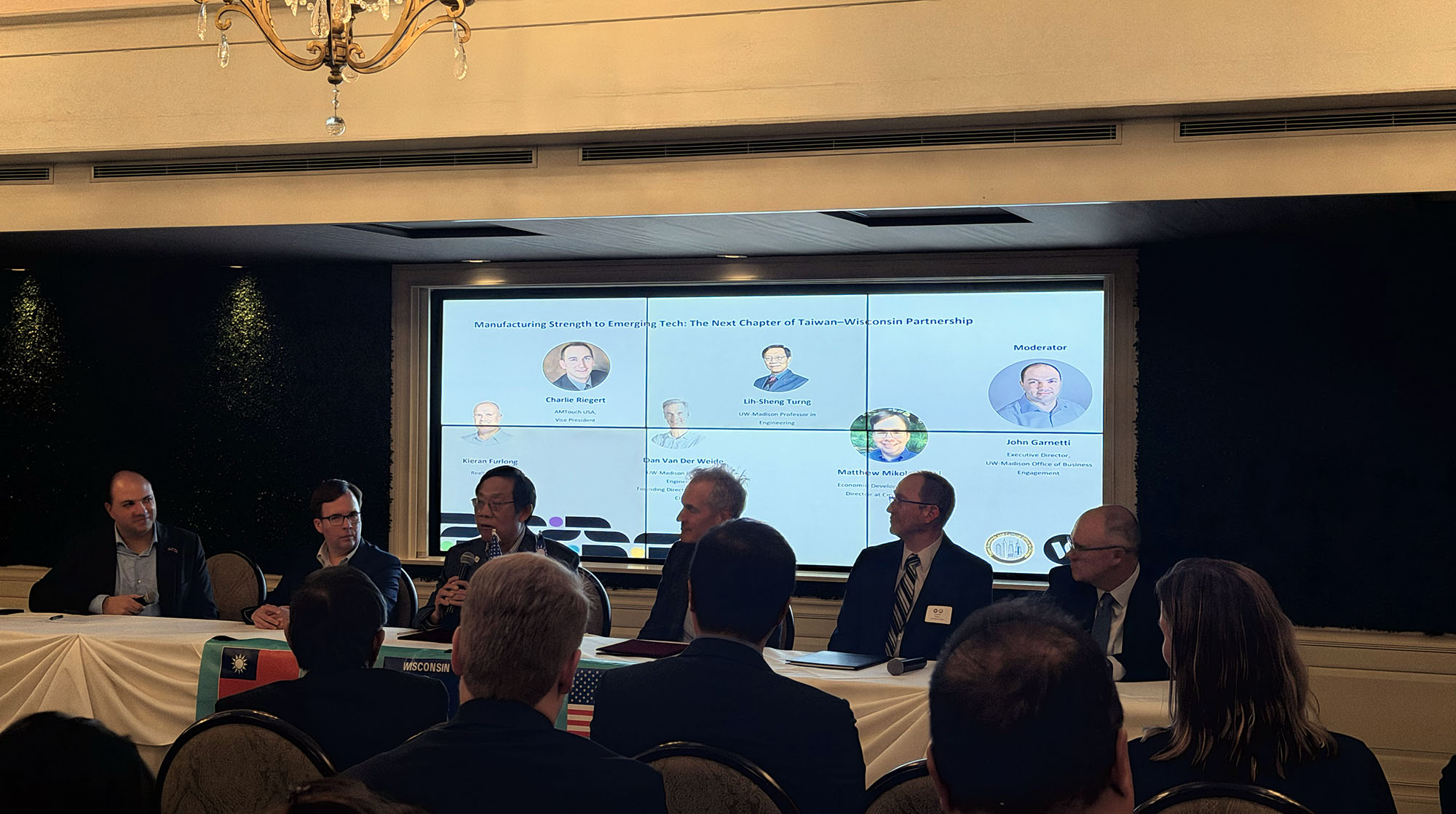
The panel introduces itself
So at this moment, I'd like to ask, uh, my speakers to briefly introduce themselves and feel free to mention any titles
Good 18:30 afternoon, everyone and
Good to see you, Anderson. I want to extend a welcome to all of you that are joining us, uh, 19:00
All the real estate work, uh, within the city of Madison. So a lot of, of, of my focus, uh, working
Good afternoon, everyone. My name is Lee Chen 19:30 20:00 20:30
Is about sixty faculty, uh, organized along five pillars of, of press leaders. And, uh, so we have a very strong interest in promoting integrated circuit chips, uh, technology, 21:00 usually from more of a power, wide band gap and, uh, quantum communications So, uh, I have many, many different
In medical devices and bio
We're very interested
Do you 21:30
or drug effects
So I view the chips, uh, concept as something that's much broader than simply powering AI data systems. There's so much more people- 22:00
Charlie Reardon, the vice president of AM Touch USA. We are a subsidiary of a Taiwanese touchscreen manufacturer. Touchscreens in Taiwan, and our 22:30 team here in Madison. We design those touchscreens into medical devices, industrial and security solutions. Things that are more robust than your phone. The same technology in your phone, but more robust solutions.
Our small team in Brookfield, Wisconsin. My history, I'm a Badger. There you go. I could see your questions. Right. Um, but I was in the teaching world. I was teaching high school government and law and econ Asked to come into the screen is a little bit of touch screen technology 23:00 about 20 years ago to educate customers, clients, partners in the United States about how it works, how to design it in.
There's an education gap Technology that was 20 years ago and is still
June today. It was open in March. It's fantastic. I kinda felt like we were gonna loan just Vibration is happening 23:30
This one's much better. Good evening, everyone. So my name is Kieran Furlong, and I'm the CEO of-
Some folks in the room, we know it, but for the benefit of our visitors from Taiwan, um, I just wanna point out, like, all the folks, our entities in this room that helped, you know, Realta get to where it is today. Uh, so we spun out of the University of 24:00 Wisconsin Medicine Unclear in recording . Um, so we actually, uh, came out of a large Department of Energy-funded project at the University of Wisconsin.
The company is now four years old. Um, its birth was definitely midwifed by the Wisconsin Health Unclear in recording
The warm payroll 24:30
Also receive plenty of support here at home as well. So including through the state of Wisconsin
We really have seen a concerted effort from the various players here in the state to support, you know, what is for some still this kind of science 25:00
So that's the Oscar speech over. Thank you, everyone. Um, but definitely I can't wait to talk about energy and Taiwan. Uh, I'm from a small island nation as well. All right. 25:30 26:00 26:30
And, and that feels momentum with developing these technologies that folks trust. Uh, that can-do attitude resonates with our team
Working across time zones
I can certainly relate to personal experience with twenty-four seven working cycle. When one wakes up, the other will hopefully go to sleep. That's not always the case. Tom, you 27:00 want to go? Okay. Thank you. 27:30 28:00 28:30
If you want to know how much Taiwanese value education, their thousand dollar bill, which is equivalent to our hundred, has five children looking at a globe. That's how much they care. It's not Ben Franklin, it's not the founder of the country. It's kids enjoying good education. Do any of the, our other panelists like to, to answer this part of the question, 29:00 or I can move on to the next, which is a, a flip side, the flip side to the same question.
Cultural differences
While there are commonalities between Taiwanese and Wisconsinites, there are of course cultural differences as well. Uh, I'd love to hear, uh, members of the panel share experiences, and it doesn't have to be specific to Taiwan. It could be more international, uh, engagement in general. But examples of cultural differences you've obser- you've observed in your work, sorry, and how you and others have learned to bridge those cultural divides 29:30
Matt, you have some experience with international folks. Sure. Um, one of the great things about Madison is just sort of the, the diverse nature of the people that call Madison home. Um, you know, we are home to the UW Madison, which is a, a great institution that brings a lot of people here, and a lot of those individuals stay.
And I have the pleasure within my role at the city of Madison, working with a lot of entrepreneurs that are from 30:00 around the world and are looking to start a business within the city. And, and so if, you know, you, uh, you need to work with individuals, uh, literally from around the world, uh, through our offices at the city.
And, and what we've learned throughout the years is really that there's a lot of partnership opportunities in the state of Wisconsin. One of the, the benefits is the fact that Wisconsin is a more of a mid-sized state, is you really get to know what resource are-- resources are available either 30:30 through state government, through the university, through other organizations such as the Technical Council.
And so we've been really successful that when we have been working with entrepreneurs that, that are, are not, uh, are from elsewhere in the world, are really being able to pull together the resources in the community, uh, that can help support that entrepreneur. And so to the degree that there are, uh, you know, differences that, that, that need to be bridged, uh, it's very easy within this community to find those individuals 31:00
I can weigh in on this one too. Yeah. But, uh, one big difference, which you have to see
Wisconsin folks in the room only, how many of you
How can we feel happiness?
My first business trip to, uh 31:30 32:00
to the quality, right? So they make a big deal about 32:30 33:00
A small team talking to large companies
Also differences, you know, I'll quickly say in my experience, right? So we're, we're this small little team. There's only fourteen of us in Brookfield, Wisconsin. We're trying to talk to companies all over the United States in medical, industrial 33:30 applications to help them design their core technology.
That-that's our role, and, and the need is great. Um, the cultural challenge that we run into
Top-down management
Top-down management certainly gets stuff done, but it can also suppress creativity. It can suppress, uh, creative 34:00 solutions. It can suppress the
backgrounds is, is my
or my employees to, to have authority to
Always look up to the manager 34:30
How do you bridge that gap? Um